Reviewing Performance Records Reduces the Risk of Selecting a Supplier With a Poor Track Record
In July 2013, the Honourable Richard Chesterman published his written report into the implementation of a new payroll organization for Queensland Health, the public health body for the Australian state. In it, he outlined how he expected the organization delivered by IBM to cost upwards of $ane.2 billion over the next eight years. Given that the original projected cost for the project had been $98 million, he was justified in writing that: The replacement of the QH payroll organisation must accept a place in the front rank of failures in public administration in this country. It may be the worst. It represented a catastrophic failure of vendor and project direction, with blame apportioned to all sides. It also shows the potential fiscal impacts when vendors are managed poorly and communication breaks down. A more recent instance of project overspend tin be constitute in the United kingdom of great britain and northern ireland with HS2 - a high-speed railway between London, The Midlands, The Northward and Scotland. Costs estimates in 2020 were already 58% above bachelor funding, a result of the Department for Send failing to recognise the projection's risks from the outset. The Crossrail project that seeks to connect East and West London is some other notable example of projection costs overrunning. Estimated costs are at present expected to ascension to £18.7bn, more than £450m over the last estimate. The entire project is nearing £four billion over the original budget of £xiv.8billion. Vendor lifecycle management is at present a core competence in successful organisations. In an ultra-competitive global market place, businesses must expect at creative means to excerpt more value from onboarding suppliers, while simultaneously reducing risk and upholding quality. Merely beating them down on price yr after twelvemonth is not a sustainable strategy. In this article, nosotros're going to take y'all through five primal areas of vendor lifecycle management, offering practical, actionable advice. The areas we're going to cover will exist: We'll become into a bit more detail on vendor direction best practices for these topics below just starting time let'south take stock of the situation. A business's arroyo to vendor relationship management (VRM) is mostly looked at in terms of maturity. A company with an immature arroyo to VRM would be characterised past: Companies at the opposite terminate of the scale are characterised by: The diagram below shows the path to maturity in vendor human relationship direction. Take a moment to place where you remember your business sits on it. Wherever you identify your organisation existence along this continuum, in that location is probable to be improvements yous tin brand. Key to reaching stages 4 and v of the procedure is measurement and tracking relevant metrics that can be improved. The Institute for Supply Management (ISM) has identified five categories of supplier management activity that should be measured and managed to reach a level of excellence. Allow'due south explore each ane and see how this can aid to move usa along the road to optimising our management of suppliers. Information well-nigh the amount of money spent with each vendor on an almanac basis is one fundamental indicator of his importance to your business. Data needs to be collected from all types of financial transactions, summarised then classified in a way that makes sense to you, and from which you tin can draw conclusions to help place your key suppliers. Surprising results often come from interrogating and analysing controllable third-party spend. Yous might find suppliers that you take express awareness of are receiving more significant sums of money than other college profile ones. Using a dedicated solution can assistance you to visualise your spend information across vendors, enabling you to drill downward into detailed reports, compare forecast to bodily spend and take greater command. There is no one perfect style to segment vendors, cull a method that works for you. Key to this exercise is centralising your data into a spreadsheet or ideally, a defended vendor management solution. Many companies allocate their vendors into three groups past type: Big organisations volition often run VRM programs. These tin can help but will often crave some significant investment into people and resources and so may only make sense for those larger businesses, when focusing on strategic suppliers or if automation can be achieved using a supplier management solution. It's frequently easiest to start with a simple method of vendor categorisation by type to guide your activities. Many organisations have a trouble with working openly with suppliers thinking that sharing operational and financial information leaves them in a weaker negotiating position. The reverse may exist the instance. Sharing of new technologies and innovative ideas tin atomic number 82 to added value and cost savings for both parties. Y'all tin starting time a more than collaborative relationship by using a dedicated Vendor Portal to communicate with and manage your 3rd-parties. Best practise is to develop relationships at many levels, both corporate and operational, ensuring overall visibility into the supplier'south wider arrangement. This is harder to measure merely may exist counted in terms of number of supplier contacts and how often business reviews are conducted. Where there is poor or no focus on managing operation, all actions are reactive and unlikely to help amend delivery. If there are no agreed measures in identify and no way of tracking what went well or what failed (and why), the take a chance of improvement is low. Best exercise is to define, agree and implement Vendor KPIs which provide measurements based on actual historical performance. These vendor management KPIs can form part of a Vendor Scorecard covering areas primal to the value delivered by the vendor relationship, and might include: Balanced Scorecards from Gatekeeper help yous to measure, analyse and collect the performance data yous demand. Measurement and reporting of KPIs should besides: In that location should as well be periodic reviews of the relevance of each KPI, its measurement approach and its target values to ensure it's however relevant.Process improvements can only happen if evaluation reports are made available to both parties. Mature organisations publish scorecards and carry formal performance reviews with suppliers at pre-defined intervals to promote best practice and enhance relationships. At mature levels, the focus is on alignment and improving advice channels. Best practice in risk direction is divers past continually monitoring and having contingency plans for each risk area. There are many means of categorising supplier risk depending on the industry you are in and, in nearly cases, the stakes are high for ignoring it. For example, loftier on the agenda in fiscal services are risks related to cyber security breaches, blackmail and corruption, and substitution charge per unit volatility. "sixty% of companies acknowledge that they exercise non accept the resources to monitor the security and privacy practices of vendors with whom they share sensitive or confidential information." - Ponemon Establish, LLC. I hopes that there is at to the lowest degree a rudimentary hazard management programme in place in all organisations. At the very to the lowest degree, you should be aware of the risks that are of relevance to you, especially those that are based on availability and price. Mature organisations apply weight factors to each type of hazard and develop contingency plans. In add-on, consider the advice of John Brown, a take a chance expert at Deloitte. "The big question is the frequency and level of assessments". Chocolate-brown says information technology's a leading practice to assess riskier suppliers more frequently than those considered less risky. He adds that whatever time there'southward a need to increase business from a supply-chain partner, or if a partner experiences a problem, information technology's a good idea to reassess the risks of that supplier. The best chance plans define all possible scenarios and provide one or more solutions or mitigation strategies for each. The plan must exist constantly monitored for any changes in the external surroundings and adjusted as required. Whatsoever sole-source contract should have a plan B in place that tin can exist activated with immediate effect. Gatekeeper recently partnered with Vendor Centric, helping businesses to manage third-political party oversight and risks more effectively. Yous can read about it here. For more information on effective vendor management, y'all can read our related blogs. If y'all want to know more than about vendor direction systems and contract management software, volume a Gatekeeper demo today.
What is vendor performance management?
Washed well, information technology'southward a repeatable, effective method for developing and monitoring third-party providers of appurtenances and services, in order to derive as much value as possible from contracts, get the nearly from renewals and to build mutually-beneficial long-term relationships.
Get-go, a self assessment
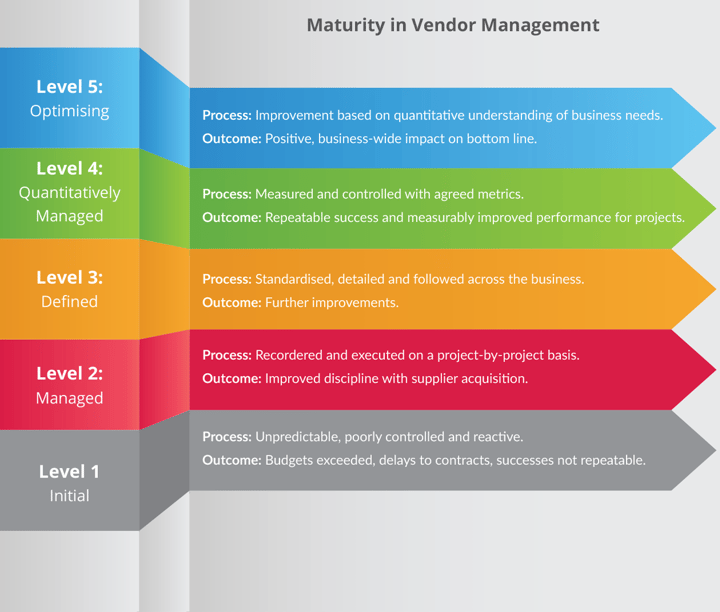
what are these relevant metrics & Vendor Management KPIs and where should you lot start?
one. Spend Visibility
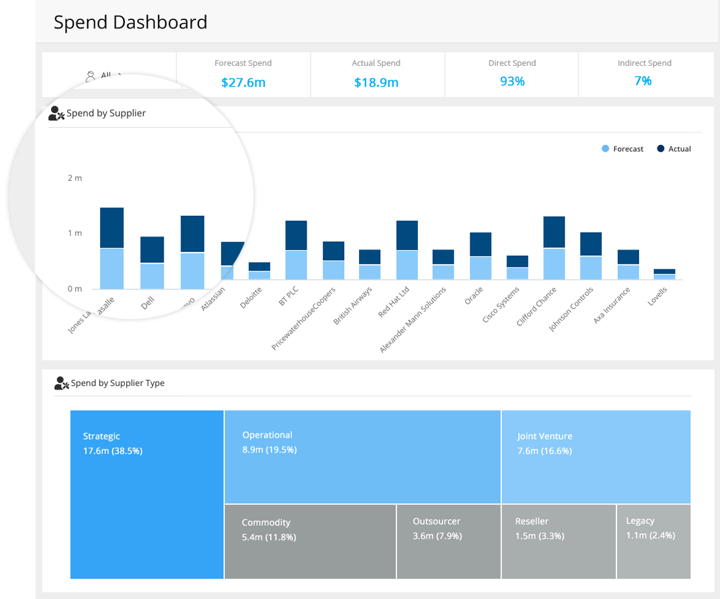 The Gatekeeper Spend Dashboard
 ii. Vendor Segmentation
3. Collaboration
iv. Vendor KPIs & Performance Direction
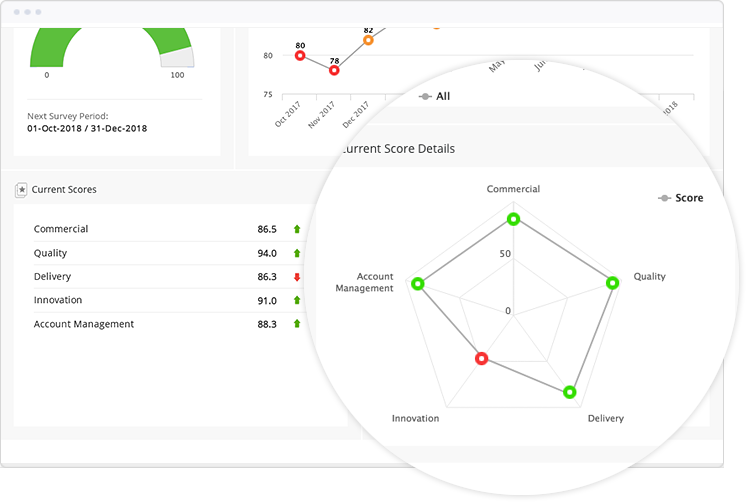 Gatekeeper Counterbalanced Scorecards
5. Gamble Management
Conversely, in manufacturing, supplier fraud, logistics costs, product theft and environmental issues may be most important. All companies have financial, applied science, security, contract and reputational risks.
Apply our quick six-point checklist to Create a vendor management plan in 2022:
blankenshipbouricipt.blogspot.com
Source: https://www.gatekeeperhq.com/blog/how-to-manage-vendors
0 Response to "Reviewing Performance Records Reduces the Risk of Selecting a Supplier With a Poor Track Record"
Post a Comment